Building cultural competence in your workplace
Understanding our shared history is one of Evolve’s 7 Steps to Reconciliation and Allyship®, our tried-and-tested framework for building confidence to show up for and support Aboriginal and Torres Strait Islander people and communities.
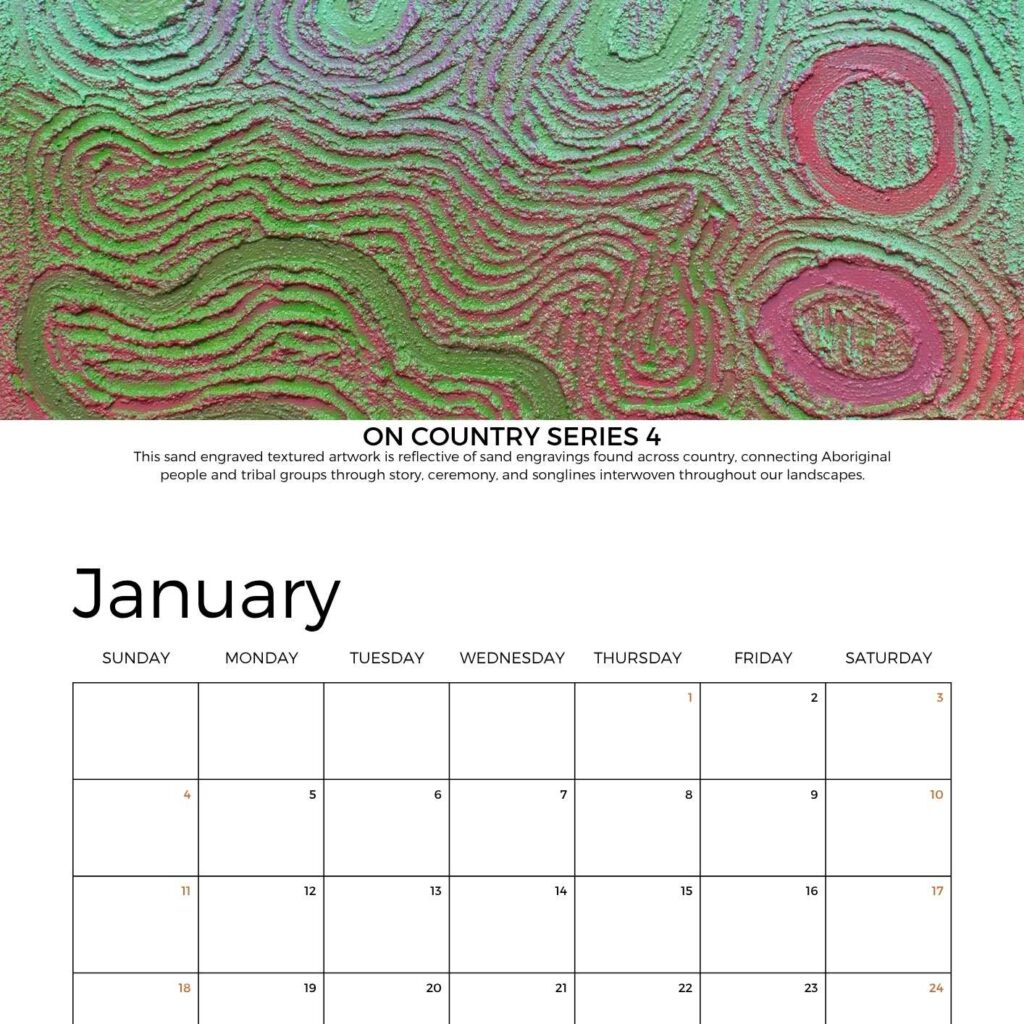
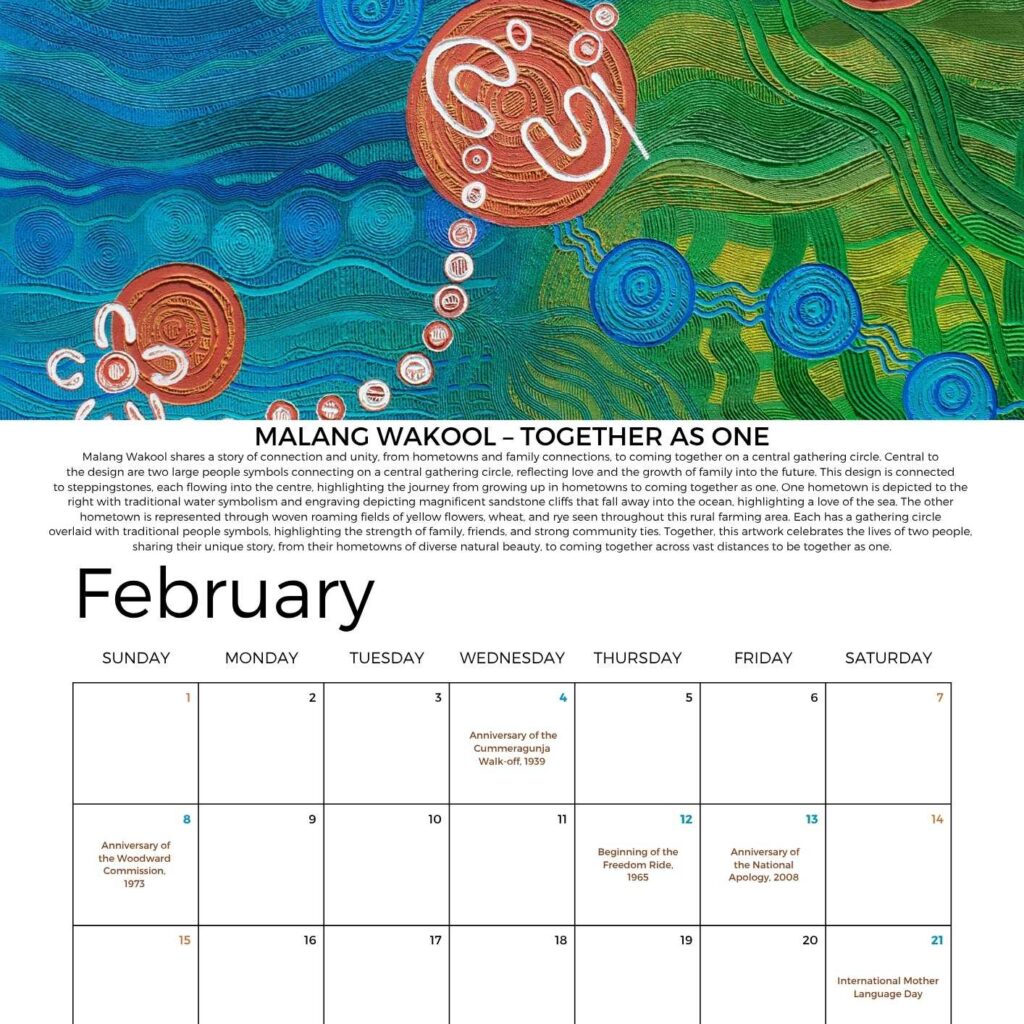
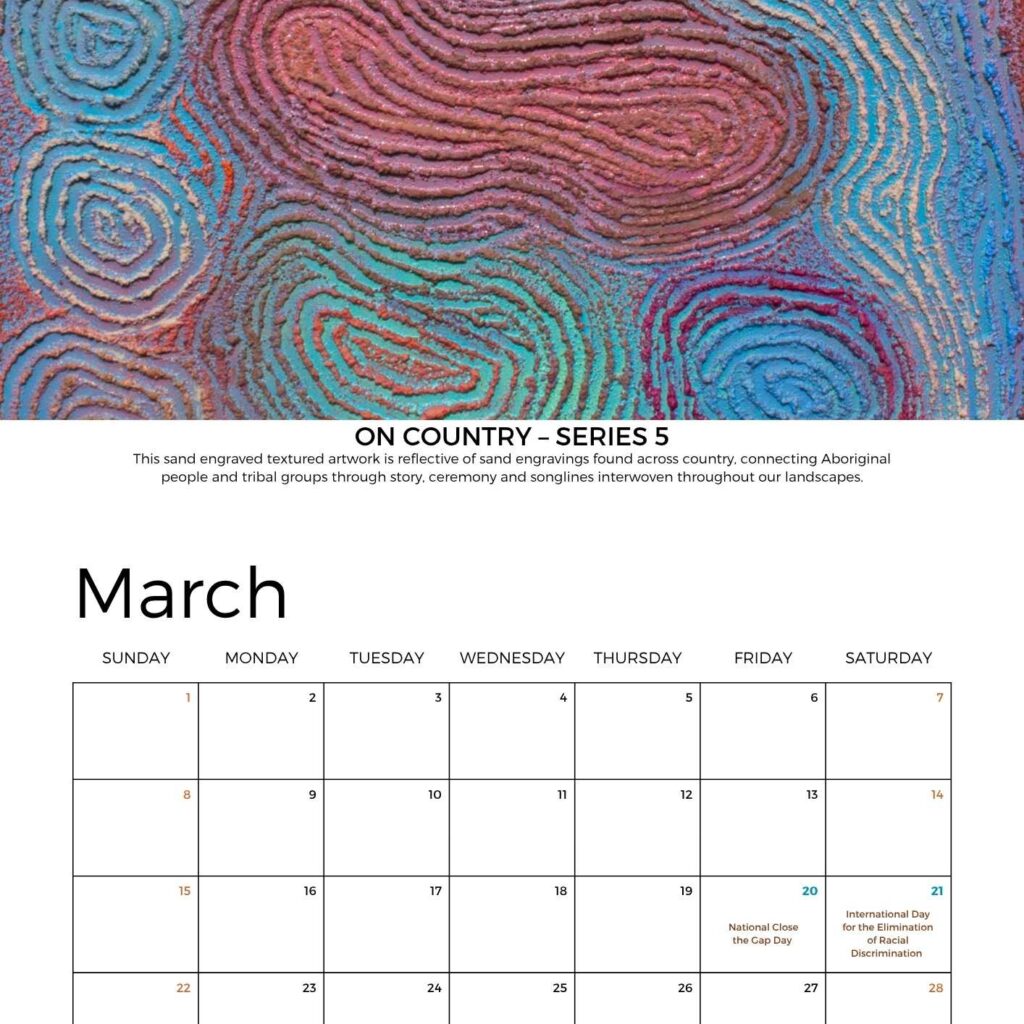
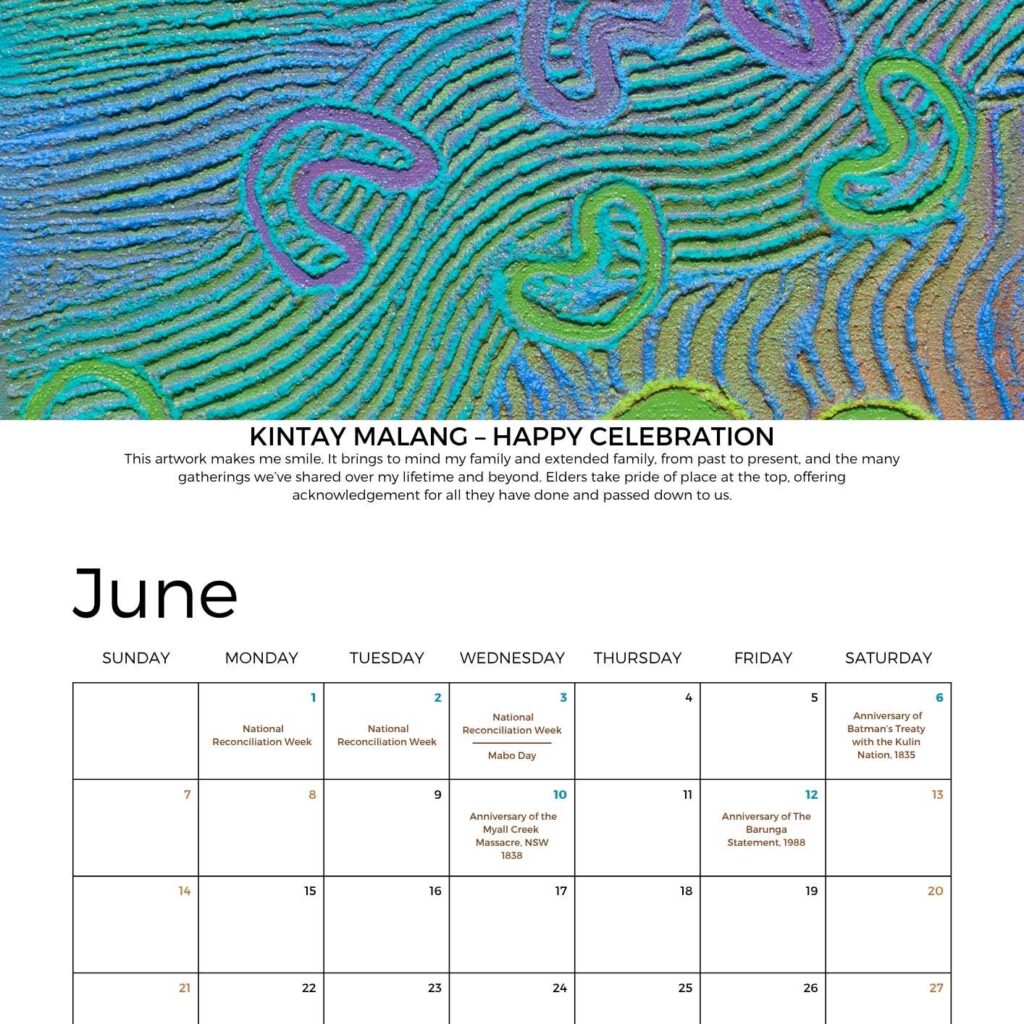
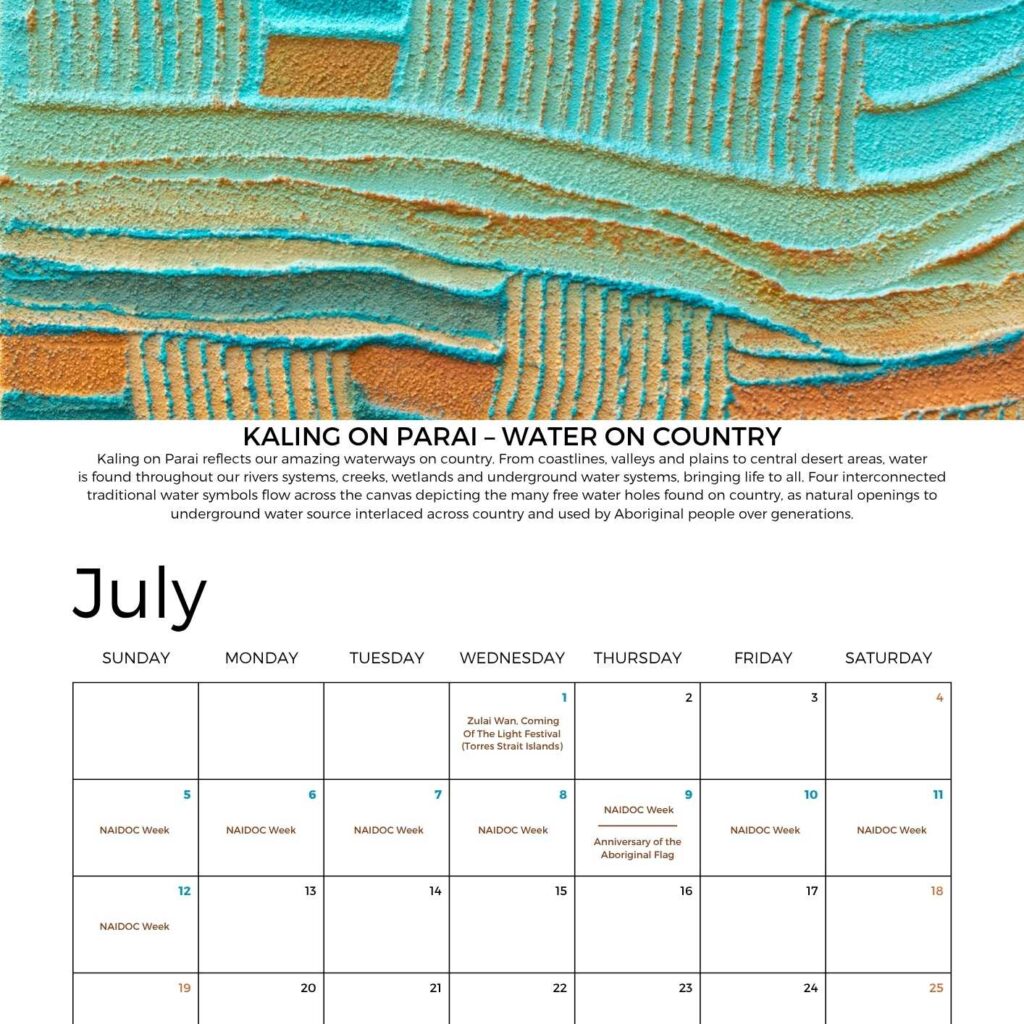
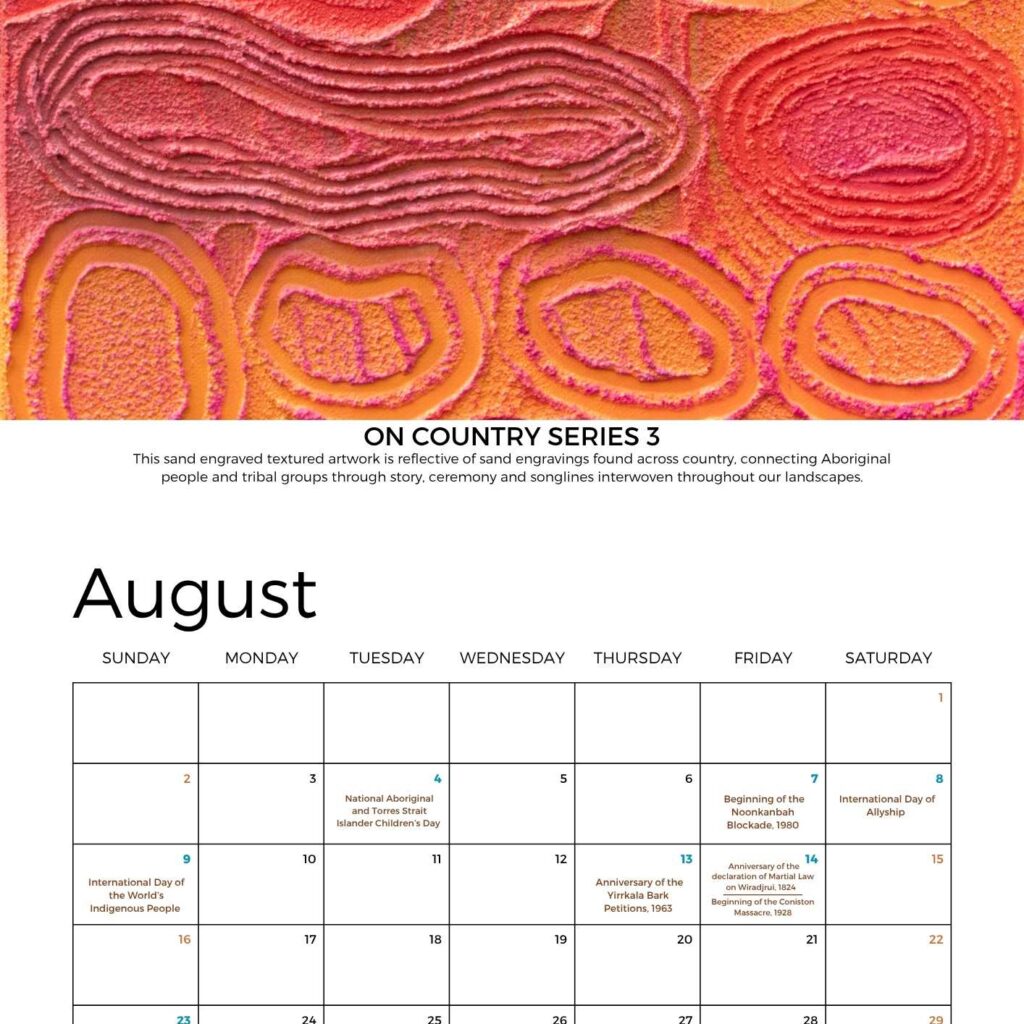
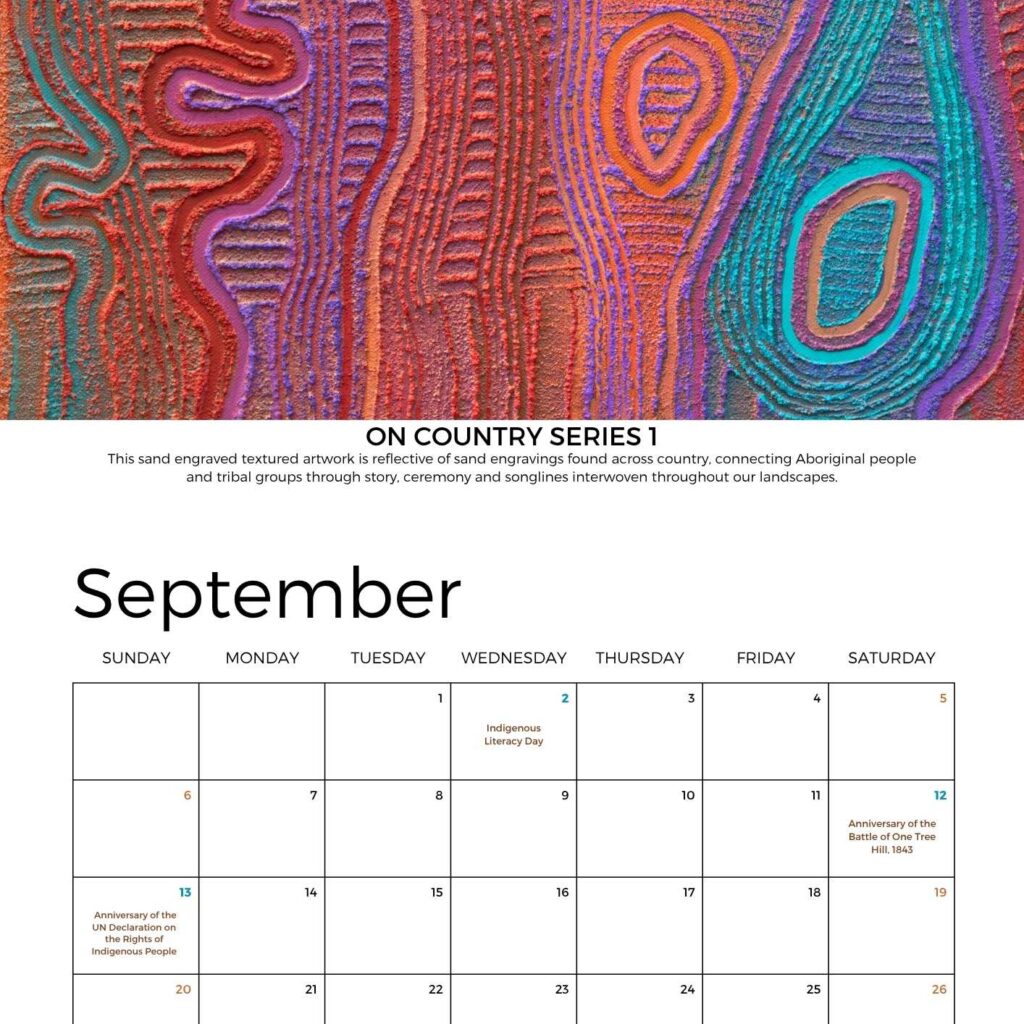
In our 2026 Calendar, you’ll find dates that document the 200+ year fight for the rights of First Nations people in Australia, providing important opportunities to acknowledge the trials and celebrate the resilience of the world’s oldest surviving culture.
In order to keep moving forward toward Reconciliation, we need more truth telling about our shared history. We’ve added more significant dates to our calendar to acknowledge the self-determination and empowerment of our First Nations peoples.
This year we’ve partnered again with Aboriginal artist, Saretta Fielding to create a calendar that is not only educational but also a beautiful addition to any home or workplace. These calendars are stunning and meaningful gifts for yourself and your colleagues, friends and family.
You can purchase the limited edition wall calendar, and original artworks, from saretta.com.au
Preview the 2026 Calendar


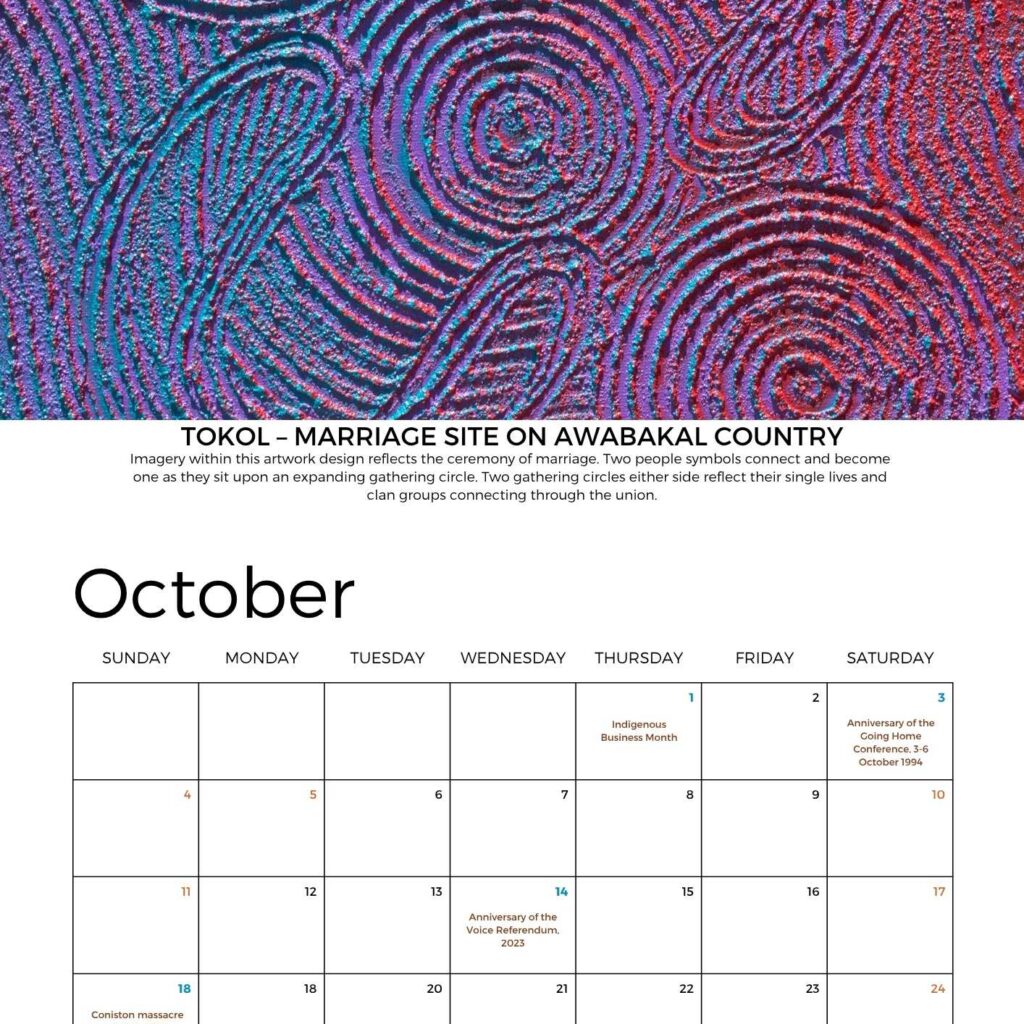
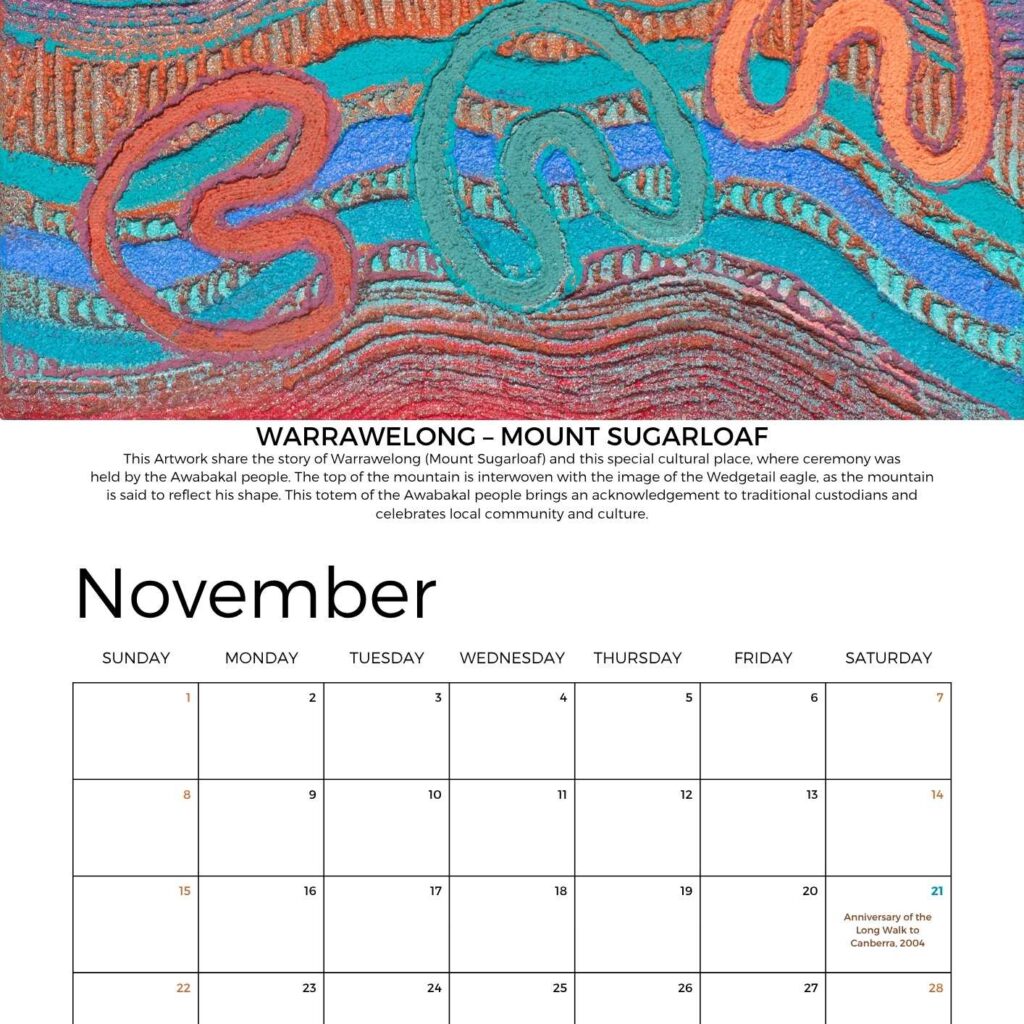
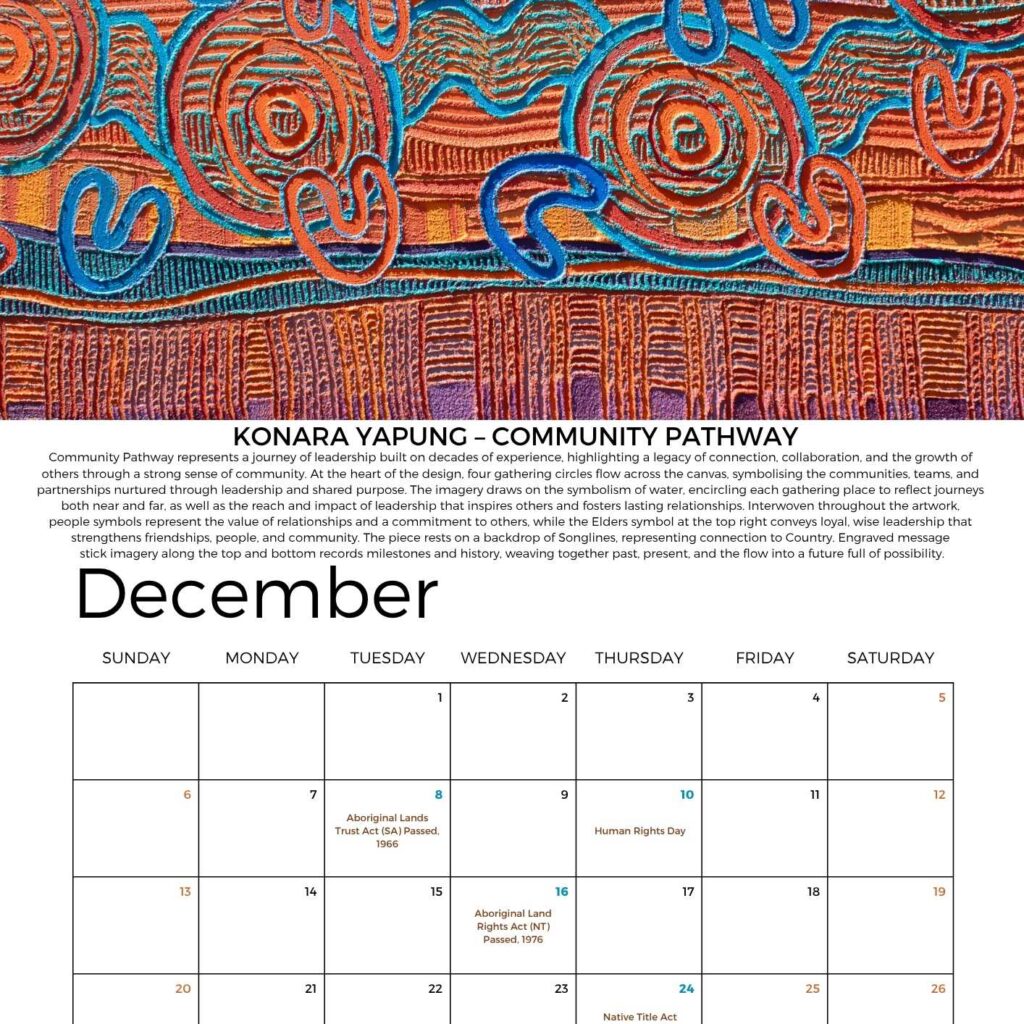
Download Free PDF Form
Download the form here.
FAQs
Our facilitators have cheerfully answered all kinds of questions – this is a safe space for learning.
What are the business benefits of improving Aboriginal and Torres Strait Islander cultural competence?
Our Cultural Competence training focuses on Aboriginal and Torres Strait Islander cultural awareness and can help your organisation to:
– Effectively engage and develop meaningful professional relationships with Aboriginal and Torres Strait Islander people, communities, and organisations.
– Attract, develop, and retain Indigenous talent to create a dynamic, diverse, and high-performance workplace.
– Safeguard your brand against the reputational damage that can result from cultural misunderstandings.
– Understand, develop, and champion a Reconciliation Action Plan that delivers positive change.
– Develop leadership skills with Evolve’s tried-and-tested R3 communication and conflict resolution framework.
– Create a culturally safe and inclusive workplace, where everyone belongs.
Does Evolve offer online cultural competence courses?
Does Evolve offer in-person cultural awareness training?
Does the online cultural competence training offer the same thing as in-person workshops?
Is it okay to just say “Aboriginal cultural awareness training”?
Aboriginal people comprise diverse Aboriginal nations, each with their own language and traditions and have historically lived on mainland Australia, Tasmania, or on many of the continent’s offshore islands.
Torres Strait Islander peoples come from the islands of the Torres Strait, between the tip of Cape York in Queensland and Papua New Guinea. Torres Strait Islanders are of Melanesian origin with their own distinct identity, history, and cultural traditions. Many Torres Strait Islanders live on mainland Australia.
If you only talk about Aboriginal cultural awareness, you are leaving out Torres Strait Islander peoples who are also Indigenous Australians.
An important way to show respect is to use the right terms when referring to Indigenous people. Terms that are okay to use are: Aboriginal and Torres Strait Islander peoples, First peoples, Indigenous Australians, First Nations, or First Australians.
It is respectful to use “people” or “peoples” after the terms “Aboriginal” and “Torres Strait Islander” and to always capitalise.
How can I help improve cultural competence in Australia?
We invite you to enjoy and share our many free educational resources:
Read our Cultural Awareness blog and subscribe to our newsletter
Download the 2026 Calendar of Significant Indigenous Dates
Ask Aunty Munya any question about Aboriginal people and culture
Do the Indigenous Cultural Awareness Quiz
Take The Online Privilege Walk
Learn what the Aboriginal Flag represents
If you are ready to take your commitment further as an individual, we encourage you to read our book, Practical Reconciliation and join the Evolve Webinar Subscription.
For those seeking a professional qualification, consider becoming an Evolve Accredited Ally.
Real stories
“I was keen to increase my understanding of Aboriginal and Torres Strait Islander peoples. The Evolve program gave me practical tools and strategies like when and how to give an Acknowledgement of Country. I increased my knowledge in some unexpected areas too, including about privilege. I highly recommend working with Evolve to anyone who values reconciling what has happened in the past and positively impacting how we move forward.”
 Adelaide ThompsonCampaign Unit Manager, Cancer Council NSW
“Working with Evolve has been a great partnership towards increasing our organisational cultural awareness at a national level. The tailored programs are highly interactive and experiential. I have observed our staff walking away with increased levels of confidence, understanding and inspiration and often with the positive exclamation ‘best training ever’.”
 Adrian CheathamAssistant Director, Workplace Diversity Team Australian Taxation Office
“I loved connecting with local Aboriginal people at the Evolve program. Together we are now ‘Taking the Bull by the Horns’ on employment strategies for people with a disability. “
 David GreelyEmployment Connections Manager WorkAbility
“I was asked about why all Aboriginal people drive Valiants. We all laughed, as I explained that Aboriginal people are as diverse as any other and that I drove an MGB sports car. My co-convenor, an older Noongar woman, was relieved that she didn’t get the question as she drove a Valiant! You can imagine the hilarity that followed”.
“As Evolve Communities have taught iAccelerate, Aboriginal Songlines are essentially knowledge networks that enable the communication of ideas to flow back and forth between two or more locations and serves as the perfect model for innovation ecosystems”
Ready to lead change?
Book a consultation with our team to explore what’s possible for your organisation.